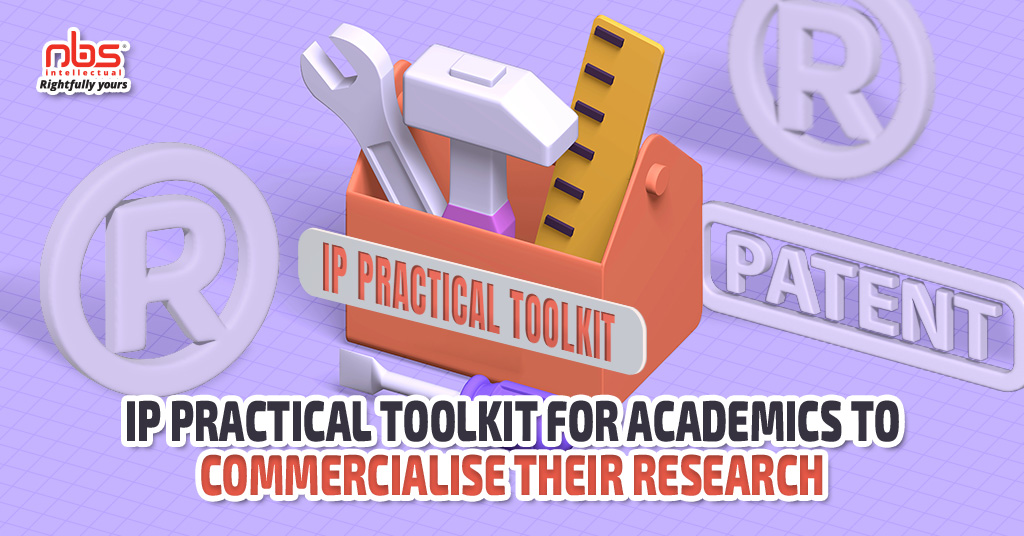
Malaysia has introduced many policies and initiatives to promote a knowledge-driven economy. One of the strategies is to encourage research and development, especially by the public universities and research institutions. The resulting research can then be translated into real-world impact through the commercialisation of the intellectual property (IP) and related rights from the knowledge generation and innovation. While Malaysian public universities have been consistently generating world-class research, the commercialisation success rate remains at a low level.
The conventional wisdom on this issue is often considered due to a lack of IP awareness among academics. However, many researchers are becoming more aware of the importance of IP and its commercialisation. Strategic follow-up steps of IP management are essential to cross the gap between the ivory tower of academia and real-world application.
Generally, commercial potential is lost because IP thinking and strategy are not integrated properly and are often sidelined in overall research planning. Having practical tools or actionable items for researchers could help bridge their innovation to the real world through IP commercialisation. Academic researchers and technology transfer offices (TTOs) could work together in adopting IP practical tools to promote commercialisation, even before engaging with industry collaborators. IP awareness must be supported with good planning throughout the research process. Equipping researchers with simple, intuitive tools that augment academic workflows would improve IP management for commercialisation that benefits universities, industry partners, and society at large.
The overarching strategy is to embed the mindset for IP commercialisation from the get-go so that the innovation potential can be maintained and maximised in the long run. Continuous discussions among academics, industry players, TTOs, and IP experts are beneficial for a robust strategy in bridging academic research and innovation to the world. The practical tools are explained in detail in the table below:
| Tool | The Problem (Conventional Practice) | Tool Description | Why It Works? | Benefits to TTOs |
|---|---|---|---|---|
|
Tool 1: The IP Pre-Flight Checklist (Before Publish or Present) |
Many IP opportunities are lost at the point of first public disclosure, e.g., conference abstracts, preprints, seminars, or informal industry discussions. |
A one-page IP pre-flight checklist completed before any public disclosure, asking:
|
This normalises IP review as a routine research step, like ethics approval or grant sign-off. |
Fewer last-minute filings, stronger priority positions, and clearer invention disclosures. |
|
Tool 2: Claims Thinking (Without Drafting Claims of a Patent Specification) |
Researchers describe novelty narrowly, as required for academic publication. Patent protection requires broader, structured thinking. |
Introduce “claim-lens thinking” through three questions:
|
It helps researchers see beyond a single experiment or embodiment and recognise various potential. |
Higher-quality disclosures and more commercially meaningful claims (‘Claims’ are an important aspect of a patent). |
|
Tool 3: The Invention Disclosure Canvas |
Traditional invention disclosure forms prioritise legal completeness over insight. |
A visual Invention Disclosure Canvas, including:
|
Researchers think in narratives and models. This aligns IP capture with how academics naturally explain their work. |
Earlier identification of spinout-ready technologies and platform IP. |
|
Tool 4: The IP Decision Tree |
IP strategy is often reduced to a single question: “Should we patent this?” |
A decision tree asking multiple questions instead:
|
It replaces default assumptions with informed strategic choice. |
More coherent and cost-effective IP portfolios. |
|
Tool 5: Collaboration Boundary Mapping |
Many IP disputes arise not from misconduct, but from unclear expectations at the start of collaboration. |
Before a project begins, researchers map and prepare:
|
It forces early alignment between academic values and commercial realities. |
Cleaner agreements and fewer downstream conflicts. |
|
Tool 6: Embedding an IP Timeline into the Research Lifecycle |
IP is treated as a one-off legal event rather than a continuous process. |
Integrate IP checkpoints into the research lifecycle:
|
It makes IP a predictable, non-disruptive part of research planning. |
Improved forecasting and resource allocation. |
|
Tool 7: Lab-Level IP Champions |
TTOs cannot provide deep engagement to every research group. |
Identify IP champions within labs –postdocs, senior PhD students, or lab managers – and provide them with basic IP training. |
Peer-to-peer reinforcement is more effective than top-down messaging. |
Scalable IP awareness without increasing staff load. |
|
Tool 8: Commercialisation Readiness Self-Assessment |
Researchers often misjudge how close their work is to market. |
A short self-assessment covering:
|
It reframes commercialisation as a staged process rather than a leap. |
Better prioritisation of projects with real commercial potential. |
|
Tool 9: Post-Filing IP Feedback Loops |
Researchers file patents but rarely learn from the process. |
After filing, provide a short debrief explaining:
|
Each filing becomes an educational opportunity. |
Progressively stronger disclosures over time. |
|
Tool 10: Integrating IP into Academic Training |
IP education is often optional, ad hoc, and disconnected from research practice. |
Embed IP concepts into:
|
Researchers learn IP in context, not as abstract legal theory. |
Cultural change rather than continual remediation. |
As research increasingly moves from discovery toward real-world application, developing an awareness of intellectual property can help researchers better recognise and manage the potential value of their work.
This toolkit is intended as a practical starting point for researchers who wish to incorporate IP awareness into their research practice.
Interested in building an IP mindset in your research?
Start with the toolkit – or contact us to explore how it could support your research and innovation journey.
References:
Shahidan et al., 2025. Examining Issues and Challenges in the Commercialization of University Generated Intellectual Property Rights in Malaysia. https://ir.uitm.edu.my/id/eprint/113511/1/113511.pdf
Tan, 2025. The Benefits of Having IP. https://nbs.com.my/the-benefits-of-having-ip/

Dr. Shakir Yusop
Patent Executive [email protected]